Thursday, February 7, 2013
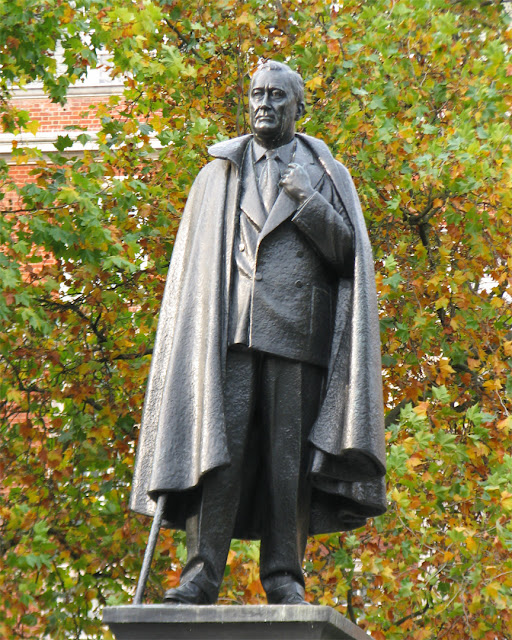
Franklin Delano Roosevelt
Franklin Delano Roosevelt statue by William Reid Dick, 1948
Grosvenor Square, Mayfair
London, October 2009
“The Roosevelt Memorial was funded in 1946 entirely through the sale of a souvenir brochure to the British public. It was the idea of a society called The Pilgrims, who were dedicated to promoting goodwill and friendship between Great Britain and America. So enthusiastic was the public response to the subscription that the total sum required was reached within six days from initial announcement of the appeal (a maximum donation of 5 shillings was set, to allow a greater number to contribute). More than 160,000 separate donations were received. It's worth noting that Britain was approaching starvation during this period (more so than during the war itself), with limited housing and disappearing jobs. Spare funds would have been tough to find. The fact that so many were willing, is testament to the high regard FDR enjoyed among the British Public.” (Roosevelt's Statue - Grosvenor Square, Inside Guide to London)
See also: Allies
Wednesday, February 6, 2013
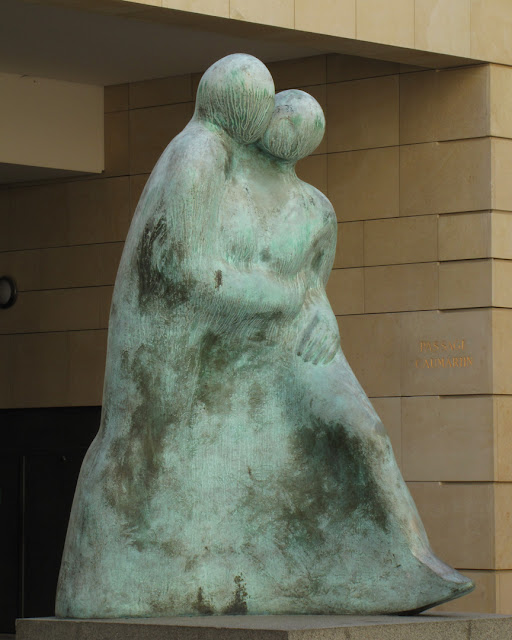
Baiser Promenade
“Baiser Promenade” (Kiss Promenade) by Chantal Blanchy, 2000
Square Édouard-VII
Quartier de la Chaussée-d'Antin, 9th arrondissement
Paris, July 2012
Tuesday, February 5, 2013
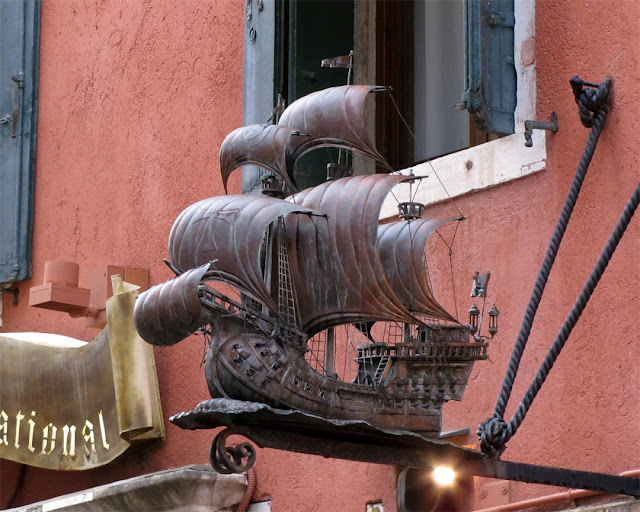
La Caravella
Sign of “La Caravella” restaurant
Via XXII Marzo, San Marco
Venice, September 2012
“A caravel was a light, fast ship in the days of sail. In its Italian version, La Caravella is the dining room of the Hotel Saturnia in Venice. And a handsome room it is, even for this landlubber, with its ship’s wheel, ropes, hooks, lamps, chains and abundance of dark wood. It is also an excellent restaurant.” (Restaurant La Caravella, Venice, Bown's Best)
Monday, February 4, 2013
Balloons
Balloons, Alexanderhaus (Alexander House) by Peter Behrens in background
Alexanderplatz
Berlin, September 2011
See also: Völkerfreundschaft - Urania-Weltzeituhr - Haus des Lehrers - Alexanderhaus - Berolinahaus
Sunday, February 3, 2013
Europe, The Four Continents
Europe, The Four Continents by Daniel Chester French, 1903-1907
Alexander Hamilton U.S. Custom House
Bowling Green
Financial District, Lower Manhattan
New York, September 2008
“The next sculpture to the right is Europe. The central figure in this sculpture sits majestically on a throne with a relief on the side referencing an ancient frieze from the Parthenon. She sits up straight, her crowned head held high as she looks somberly ahead. She wears a voluminous, draping cloak, in the style of the ancient Greeks, with a hem decorated with coats of arms. Her left arm rests on a large book, which is itself on top of a globe of the earth. Behind her, the throne turns into the front of a ship, and there is a Roman Imperial Eagle perched above it. Behind the central figure there sits an old woman, shrouded in a long cape, and reading from a book.” (The Four Continents, New York City Public Art Curriculum)
See also: Asia - America - Africa (The Four Continents)
Saturday, February 2, 2013
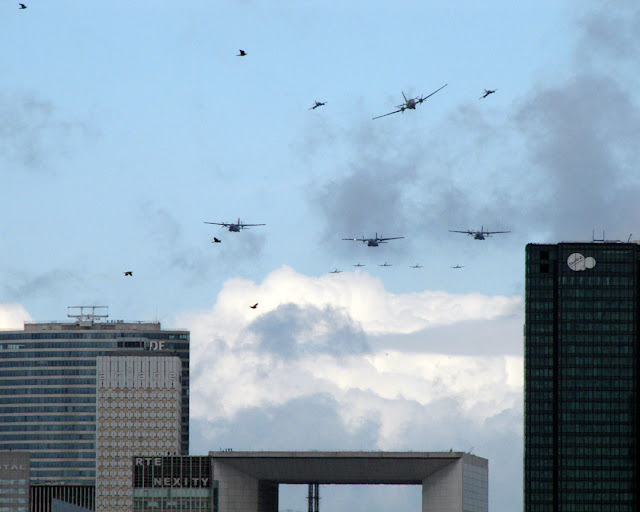
Planes and Birds
Planes (and birds) flying over La Défense on Bastille Day
Seen from the Avenue de la Grande-Armée
Paris, July 2012
Friday, February 1, 2013
Bartolomeo Colleoni
Statue of Bartolomeo Colleoni by Andrea del Verrocchio, cast by Alessandro Leopardi
Campo Santi Giovanni e Paolo, Castello
Venice, October 2012
“The campo also contains the only equestrian monument ever erected by La Serenissima. The rider, Bartolomeo Colleoni, served Venice well as a condottiere, or mercenary commander—the Venetians preferred to pay others to fight for them on land. When he died in 1475, he left his fortune to the city on the condition that a statue be erected in his honor ‘in the piazza before San Marco.’ The Republic's shrewd administrators coveted Colleoni's ducats but had no intention of honoring anyone, no matter how valorous, with a statue in Piazza San Marco. So they collected the money, commissioned a statue by Florentine sculptor Andrea del Verrocchio (1435-88), and put it up before the Scuola Grande di San Marco.” (Campo Santi Giovanni e Paolo, Fodor's Venice Sights)
Subscribe to:
Posts (Atom)