Showing posts with label Florence+2009. Show all posts
Saturday, June 29, 2019
Via dei Brunelleschi
Detail of the facade
Palazzo Pola e Todescan, 1903
Via dei Brunelleschi
Florence, December 2009
“The Palazzo Pola e Todescan is a building in central Florence, Italy. The palazzo was completed in 1903. It is in the Art Nouveau style and was designed by architect Giuseppe Paciarelli. The building was initially built as residence for Counts of Pola. It housed the Florence branch of Pola & Todescan, a store selling clothing made in Britain. As of 2015, it is occupied by a bank.” (Palazzo Pola e Todescan, Wikipedia)
Sunday, June 23, 2019
L'albero del fuoco
“L'albero del fuoco” (The Tree of Fire) by Giuseppe Calonaci, 1999
Piazza de' Pitti
Florence, December 2009
Monday, June 17, 2019
Zodiac on the Wheel
Wheel on Neptune's chariot with Zodiac signs
Fountain of Neptune by Bartolomeo Ammannati
Piazza della Signoria
Florence, December 2009
“At first glance, the Zodiac signs engraved on Neptune’s chariot follow a traditional pattern starting with Aries and ending with Virgo; however, after closer examination, the depiction of Virgo does not follow a traditional representation of Virgo as Virgin, but instead depicts her as a bride. Additionally, Virgo is presented with a unicorn seated on her lap. The combination of these two unusual elements alludes to biblical symbolism. These two figures are anointing this fountaining as a baptistry and proclaiming the water’s purity. Philosophers such as Andrea Bacci suggest that the Virgo in Ammannati's fountain is representing Christ’s bride and the unicorn represents the Christ child. Due to the well-established association of purity with both Virgo and unicorns, Ammannati’s combination of these two figures creates a clear representation of Christ’s purity. In Greek mythology, the unicorn’s purity was so strong that even by placing the tip of its horn in water, it could purify the most toxic water. In Virgo’s right hand we see a loaf of bread where an ear of corn usually lies, furthering the idea that this fountain is being proclaimed as a baptistry.” (Fountain of Neptune, Wikipedia)
Tuesday, June 11, 2019
Farmacia del Cinghiale
Farmacia del Cinghiale (Pharmacy of the Wild Boar)
Piazza del Mercato Nuovo
Florence, December 2009
“The pharmacy, whose foundation dates from the first half of the 18th century, owes its name to the fountain with a wild boar, known as the ‘Porcellino’, a bronze statue by the sculptor Pietro Tacca (1612) which stood at its entrance in the past, and is now to be found on the shorter side of the Straw Market Loggia. Still today the pharmacy occupies its original site, on the ground floor of a building once owned by the Silk Merchants Guild, then by the Bankers Guild and lastly by the Ospedale degli Innocenti. The pharmacy's ancient origin is documented in an important text, published in Florence in 1752, in which the Florentine physician Niccolò Branchi della Torre listed a series of chemical experiments conducted in the laboratory of this "Spezieria" (the text, now in the Palatino collection of the Biblioteca Nazionale Centrale, bears the significant title ‘Index of chemical experiments that will be demonstrated by Niccola Branchi Doctor in Philosophy and Medicine during the current year MDCCLII in Florence in the Laboratory of the Spezieria del Cinghiale in Mercato Nuovo for the use of some associates’). This text not only testifies to the pharmacy's function as an avant-garde research centre, but it also shows the important status of Branchi, who in 1757 was appointed by Grand Duke Francis Stephen of Lorraine to open the first school of chemistry at Pisa. In the 19th century the pharmacy became a meeting place for illustrious intellectuals, such as the authors Aleardi, Prati, De Amicis and Fucini, the latter recalled by a memorial stone inside the pharmacy. The pharmacy has undergone numerous changes, also subsequent to damage caused by the flood of the Arno in 1966. Of its antique furnishings and original pharmaceutical equipment there remain only a scale for weighing persons and, on the outside, the white and green tiles framing the windows and front door.” (Farmacia del Cinghiale, Museo Galileo)
Wednesday, June 5, 2019
Agostino Bausa
Coat of arms of cardinal Agostino Bausa
Archiepiscopal Palace
Piazza San Giovanni
Florence, December 2009
“Agostino Bausa, OP (23 February 1821 – 14 April 1899) was an Italian cardinal of the Roman Catholic Church. A member of the Dominican Order, he served as Archbishop of Florence from 1889 to 1899. Bausa was born in Florence, Grand Duchy of Tuscany in present Italy, on 23 February 1821. He entered the Order of Preachers, better known as the Dominican Order, and was ordained on 24 March 1845 by Paolo Augusto Foscolo, Latin Patriarch of Jerusalem. Bausa was raised to the rank of cardinal by Pope Leo XIII on 23 May 1887, at the age of 66. Three days later, he was assigned as a Cardinal Deacon the deaconry of Santa Maria in Domnica. On 17 January 1882, Bausa was appointed Master of the Sacred Palace. He served in that position until 23 May 1887. On 11 February 1889, Bausa was appointed Archbishop of Florence and raised to the order of Cardinal Priests with the title of Santa Sabina. On 24 March 1889, he was consecrated as bishop by Pope Leo XIII, with co-consecrators Archbishop Francesco di Paola Cassetta and Bishop Guglielmo Giosafat Giuseppe Pifferi, OSA. He was a strong opponent of blasphemy and desecration of religious holidays, and strong loyalty to Mary and the Eucharist. He frequently spoke for these causes when visiting parishes and their pastors, as well as by his preaching and his numerous writings. He died on 15 April 1899 at the age of 78. Bausa's coat of arms adorns a corner of the Archiepiscopal Palace of Florence.” (Agostino Bausa, Wikipedia)
Thursday, May 30, 2019
Zeus
“Zeus” by Benvenuto Cellini
Pedestal of “Perseus with the Head of Medusa”
Loggia dei Lanzi
Piazza della Signoria
Florence, December 2009
“Perseus added to the cast of Olympian gods protecting the Medici. Weil-Garris also focuses on the pedestal beneath the sculpture in the round. However, the present pedestal may not have been Cellini's original intent, as the relief was still being worked on and installed when the bronze sculpture above had already been revealed. The Medici still dominated the theme of the pedestal as Perseus in the pedestal is an allegory for Duke Francesco Medici.” (Perseus with the Head of Medusa, Wikipedia)
Friday, May 24, 2019
Hercules and Nessus
“Hercules and Nessus” by Giambologna, 1599
Loggia dei Lanzi
Piazza della Signoria
Florence, December 2009
“Nearby is Giambologna's less celebrated marble sculpture Hercules and Centaur (1599) and placed here in 1841 from the Canto de' Carnesecchi. It was sculpted from one solid block of white marble with the help of Pietro Francavilla.” (Loggia dei Lanzi, Wikipedia)
Saturday, May 18, 2019
The Rape of Polyxena
The Rape of Polyxena by Pio Fedi, 1865
Loggia dei Lanzi
Piazza della Signoria
Florence, December 2009
“Fedi is best known for his sculpture of the Rape of Polyxena, or Pyrrhus and Polyxena (unveiled 1866), in the Loggia dei Lanzi in Florence, Italy. Fedi had a studio at 89 Via de Serragli. He also completed two of the statues of illustrious Tuscans, Niccola Pisano and Andrea Cesalpino, for the Loggiato degli Uffizi which is adjacent to the Loggia dei Lanzi. His other works included a sculptural group of the Fury of Atamante, King of Thebes, The Genius of Fishing, Hope Nourishing Love, Hyppolite and Dianora del Bardi, and Castalla persecuted by Apollon. He designed the Monument to General Manfredo Fanti, molded in bronze by Papi, which stands in the Piazza San Marco.” (Pio Fedi, Wikipedia)
Sunday, May 12, 2019
Abduction of a Sabine Woman
Abduction of a Sabine Woman by Giambologna, 1583
Loggia dei Lanzi
Piazza della Signoria
Florence, December 2009
“Abduction of a Sabine Woman (or Rape of the Sabine Women) is a large and complex marble statue by the Flemish sculptor and architect Giambologna (Johannes of Boulogne). It was completed between 1579 and 1583 when Giambologna was a student at the prestigious Accademia delle Arti del Disegno, Rome, under he patronage of Cosimo I de' Medici. Giambologna achieved widespread fame in his lifetime, and this work is widely considered his masterpiece. It has been in the Loggia dei Lanzi, Florence, since August 1582. The statue is composed in the figura serpentina style. It depicts three nude figures: a young man in the center who has seemingly taken a woman from an despairing older man below him. It is ostensibly based on the rape of the Sabine Women incident from the early history of Rome when the city contained relatively few women, leading to their men committing a raptio (large-scale abduction; the word is rendered as rape in archaic or literary English) of young women from nearby towns and cities. It was the first of Giambologna's statues for Francesco de’ Medici of Tuscany, and is produced in the Mannerist style associated with the Italian High Renaissance. It consists of three full figures and was carved from a single block of white marble. It was not given a title until after it was completed. Giambologna was typically non-committal about the subject matter of his work, and in this instance wanted to produce a large, monumental sculpture that would display his virtuosity. Around the time it was finished, and before Francesco had it installed at the Loggia dei Lanzi, Vincenzo Borghini suggest the title The Rape of the Sabines, and thus a bronze relief was added to the pedestal to link it with the Roman myth.” (Abduction of a Sabine Woman, Wikipedia)
Monday, May 6, 2019
Mother of Christ and Saints
Detail of the facade of Santa Maria del Fiore (Saint Mary of the Flower)
Piazza del Duomo
Florence, December 2009
“The competition for a new façade turned into a huge corruption scandal. The wooden model for the façade of Buontalenti is on display in the Museum Opera del Duomo. A few new designs had been proposed in later years, but the models (of Giovanni Antonio Dosio, Giovanni de' Medici with Alessandro Pieroni and Giambologna) were not accepted. The façade was then left bare until the 19th century. In 1864, a competition held to design a new façade was won by Emilio De Fabris (1808–1883) in 1871. Work began in 1876 and was completed in 1887. This neo-gothic façade in white, green and red marble forms a harmonious entity with the cathedral, Giotto's bell tower and the Baptistery, but some think it is excessively decorated. The whole façade is dedicated to the Mother of Christ.” (Florence Cathedral, Wikipedia)
Saturday, March 24, 2012
Bronze Turtle
Bronze turtle by Giambologna
Obelisk by Bartolomeo Ammannati
Piazza Santa Maria Novella
Florence, December 2009
Friday, March 16, 2012
Dante and the Eagle
Dante Alighieri by Enrico Pazzi, 1865
Piazza di Santa Croce
Florence, December 2009
See also: Basilica di Santa Croce
Saturday, January 28, 2012
Saturday, November 5, 2011
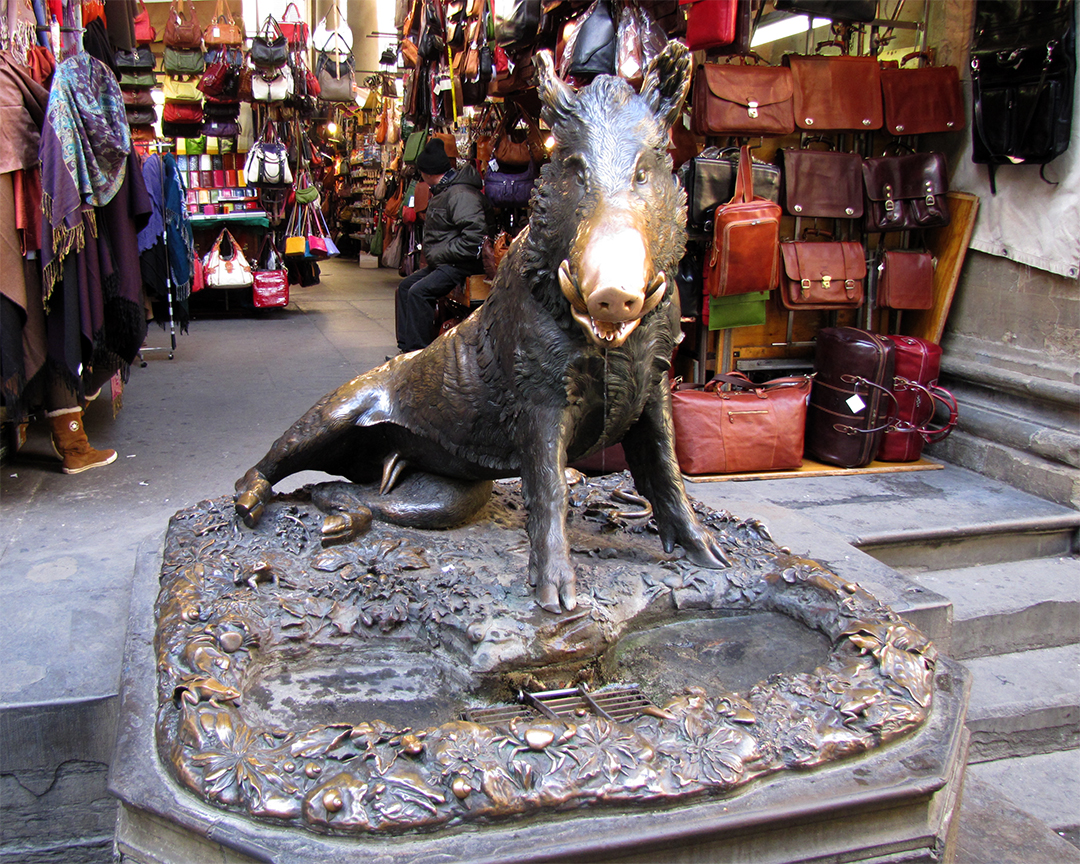
Il Porcellino
The “Porcellino” (Piglet), but it is actually a boar
Copy of the original fountain by Pietro Tacca
Loggia del Mercato Nuovo
Florence, December 2009
Wednesday, December 1, 2010
Wednesday, September 8, 2010
Fabbrica di Cornici
Fabbrica di cornici (Picture frame maker)
Piazzetta di San Michele Visdomini
Florence, December 2009
Saturday, September 4, 2010
Perseus
“Perseus with the Head of Medusa” by Benvenuto Cellini, 1554
Loggia dei Lanzi
Piazza della Signoria
Florence, December 2009
See also: Perseus with the Head of Medusa
Wednesday, April 14, 2010
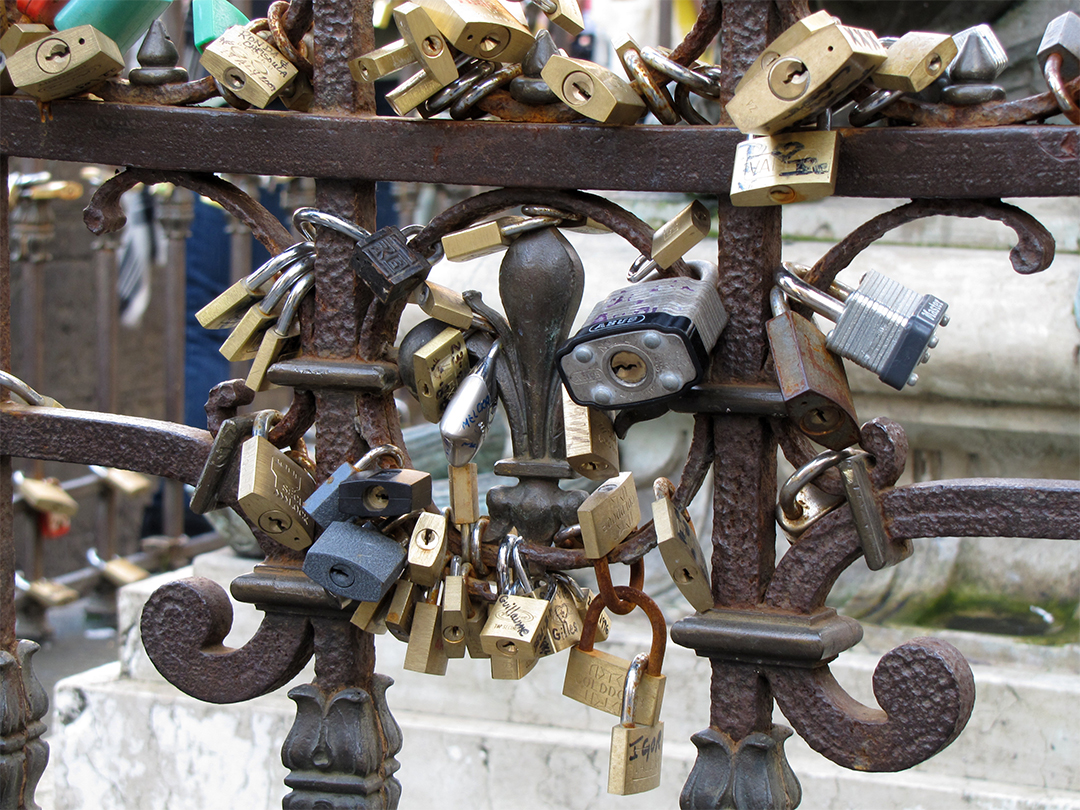
Love Padlocks
Love padlocks at the railing
Bust of Benvenuto Cellini by Raffaele Romanelli
Ponte Vecchio
Florence, December 2009
See also: Cadenas d'amour - Ksusha and Kolia - Pont de l'Archevêché - Ponte Milvio - Not Anymore
Wednesday, March 17, 2010
Subscribe to:
Posts (Atom)