Friday, November 30, 2012

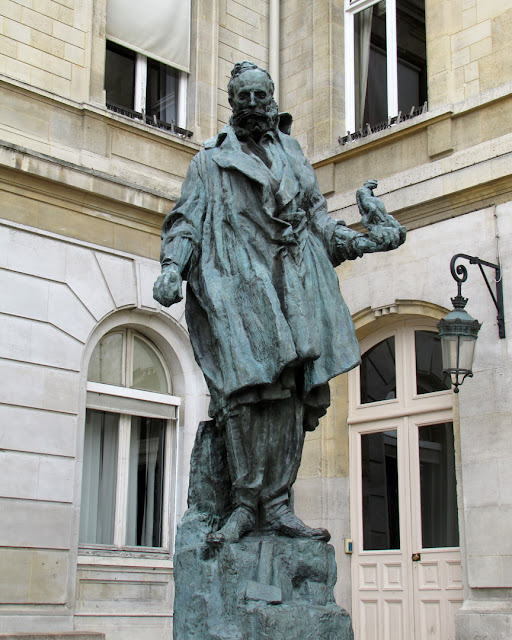
Carpeaux at Work

Carpeaux au travail, Carpeaux at Work by Antoine Bourdelle, Paris

Carpeaux au travail (Carpeaux at Work) by Antoine Bourdelle, 1910
Rue Péclet
Quartier Saint-Lambert, 15th arrondissement
Paris, July 2012

Thursday, November 29, 2012

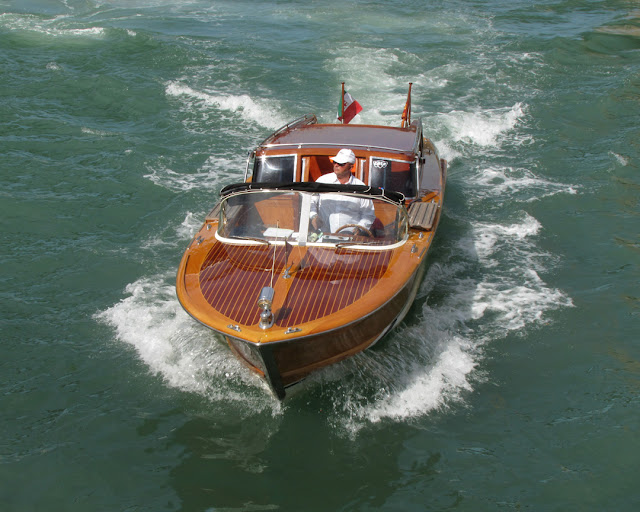
Riva Aquarama

Riva Aquarama speedboat, Canal Grande, Grand Canal, Venice

A Riva Aquarama speedboat on the Canal Grande (Grand Canal)
Seen from the Ponte della Costituzione (Constitution Bridge)
Venice, September 2012

“Venice’s water-taxis are sleek and speedy vehicles that can penetrate most of the city’s canals. Unfortunately their use is confined to all but the owners of the deepest pockets, for they are possibly the most expensive form of taxi in western Europe: the clock starts at €13 and goes up €1.80 every minute. All sorts of surcharges are levied as well: €5 for each extra person if there are more than two people in the party; €3 for each piece of luggage other than the first item; €8 for a ride between 10pm and 6am. There are three ways of getting a taxi: go to one of the main stands (at Piazzale Roma, the train station, Rialto and San Marco Vallaresso), find one in the process of disgorging its passengers, or call one by phone. If you phone for one, you’ll pay a surcharge, of course.” (Jonathan Buckley, The Rough Guide to Venice & the Veneto)

Wednesday, November 28, 2012

Paul-Löbe-Allee

Promenade with the Internationales Handelszentrum by Erhardt Gißke in background, Paul-Löbe-Allee, Berlin

Promenade with the Internationales Handelszentrum by Erhardt Gißke in background
Paul-Löbe-Allee
Berlin, September 2011

Tuesday, November 27, 2012

Robert Grosvenor

Robert Grosvenor, 1st Marquess of Westminster by Jonathan Wylder, 1998
On the plinth: “When we build let us think we build forever”
Wilton Crescent, Westminster
London

Robert Grosvenor, 1st Marquess of Westminster by Jonathan Wylder, 1998
On the plinth: “When we build let us think we build forever”
Wilton Crescent, Westminster
London, October 2009

“Therefore, when we build, let us think that we build for ever. Let it not be for present delight, nor for present use alone; let it be such work as our descendants will thank us for, and let us think, as we lay stone on stone, that a time is to come when those stones will be held sacred because our hands have touched them, and that men will say as they look upon the labour and wrought substance of them, ‘See! this our fathers did for us.’”
(John Ruskin, The Seven Lamps of Architecture, 1849)
Monday, November 26, 2012

Square Émile-Chautemps

Sign of Square Émile-Chautemps, 3e arrondissement, Paris

Sign of Square Émile-Chautemps
Square Émile-Chautemps
Quartier des Arts-et-Métiers, 3rd arrondissement
Paris, July 2012

Sunday, November 25, 2012

Palazzo Contarini del Bovolo

External spiral staircase by Giorgio Spavento, Palazzo Contarini del Bovolo, Venezia

External spiral staircase by Giorgio Spavento
Palazzo Contarini del Bovolo
Calle Contarini del Bovolo, San Marco
Venezia, September 2012

“On the wall of the alley on the south side of Campo Manin, a sign directs you to the staircase known as the Scala del Bovolo – bovolo is the word for snail shell in Venetian dialect. External staircases, developed originally as a way of saving space inside the building, were a common feature of Venetian houses into the sixteenth century, but this specimen, dating from around 1500, is the most flamboyant variation on the theme.” (Jonathan Buckley, The Rough Guide to Venice & the Veneto)

Saturday, November 24, 2012

Konrad Adenauer

Konrad Adenauer statue by Helga Tiemann, Adenauerplatz, Charlottenburg-Wilmersdorf, Berlin

Konrad Adenauer statue by Helga Tiemann
Adenauerplatz, Charlottenburg-Wilmersdorf
Berlin, September 2011

“Konrad Hermann Joseph Adenauer was a German statesman. As the first Chancellor of Germany (West Germany) from 1949 to 1963, he led his country from the ruins of World War II to a powerful and prosperous nation that forged close relations with old enemies France and the United States. In his years in power Germany achieved prosperity, democracy, stability and respect. He was the first leader of the Christian Democratic Union (CDU), a coalition of Catholics and Protestants that under his leadership became and has since remained the most dominant in the country.” (Konrad Adenauer, Wikipedia)