Saturday, January 31, 2004

Giraffes

Giraffes, Zoological Garden, Frankfurt am Main

Giraffes
Zoologischer Garten (Zoological Garden)
Bernhard-Grzimek-Allee
Frankfurt, October 2002

Friday, January 30, 2004

King Vulture

King vulture, Zoologischer Garten, Zoological Garden, Frankfurt

King vulture (Sarcoramphus papa)
Zoologischer Garten Frankfurt (Frankfurt Zoological Garden)
Bernhard-Grzimek-Allee
Frankfurt, October 2002

“Large and predominantly white, the king vulture has gray to black ruff, flight, and tail feathers. The head and neck are bald, with the skin color varying, including yellow, orange, blue, purple, and red. The king vulture has a very noticeable yellow fleshy caruncle on its beak. This vulture is a scavenger and it often makes the initial cut into a fresh carcass. It also displaces smaller New World vulture species from a carcass. King vultures have been known to live for up to 30 years in captivity.” (King vulture, Wikipedia)

Thursday, January 29, 2004

Flamingos

Flamingos, Zoological Garden, Frankfurt am Main

Group of flamingos
Zoologischer Garten (Zoological Garden)
Bernhard-Grzimek-Allee
Frankfurt, October 2002

Wednesday, January 28, 2004

Black rhinoceros

Black rhinoceros, Zoologischer Garten Frankfurt, Frankfurt Zoological Garden, Bernhard-Grzimek-Allee, Frankfurt

Black rhinoceros
Zoologischer Garten Frankfurt (Frankfurt Zoological Garden)
Bernhard-Grzimek-Allee
Frankfurt, October 2002

“The black rhinoceros or hook-lipped rhinoceros (Diceros bicornis) is a species of rhinoceros, native to eastern and southern Africa including Angola, Botswana, Kenya, Malawi, Mozambique, Namibia, South Africa, Eswatini, Tanzania, Zambia, and Zimbabwe. Although the rhinoceros is referred to as black, its colours vary from brown to grey. The other African rhinoceros is the white rhinoceros (Ceratotherium simum). The word ‘white’ in the name ‘white rhinoceros’ is often said to be a misinterpretation of the Afrikaans word wyd (Dutch wijd) meaning wide, referring to its square upper lip, as opposed to the pointed or hooked lip of the black rhinoceros. These species are now sometimes referred to as the square-lipped (for white) or hook-lipped (for black) rhinoceros. The species overall is classified as critically endangered (even though the south-western black rhinoceros is classified as near threatened). Three subspecies have been declared extinct, including the western black rhinoceros, which was declared extinct by the International Union for Conservation of Nature (IUCN) in 2011.” (Black rhinoceros, Wikipedia)

Tuesday, January 27, 2004

Grasshoppers

Grasshoppers, Zoologischer Garten Frankfurt, Frankfurt Zoological Garden, Bernhard-Grzimek-Allee, Frankfurt

Grasshoppers
Zoologischer Garten Frankfurt (Frankfurt Zoological Garden)
Bernhard-Grzimek-Allee
Frankfurt, October 2002

Monday, January 26, 2004

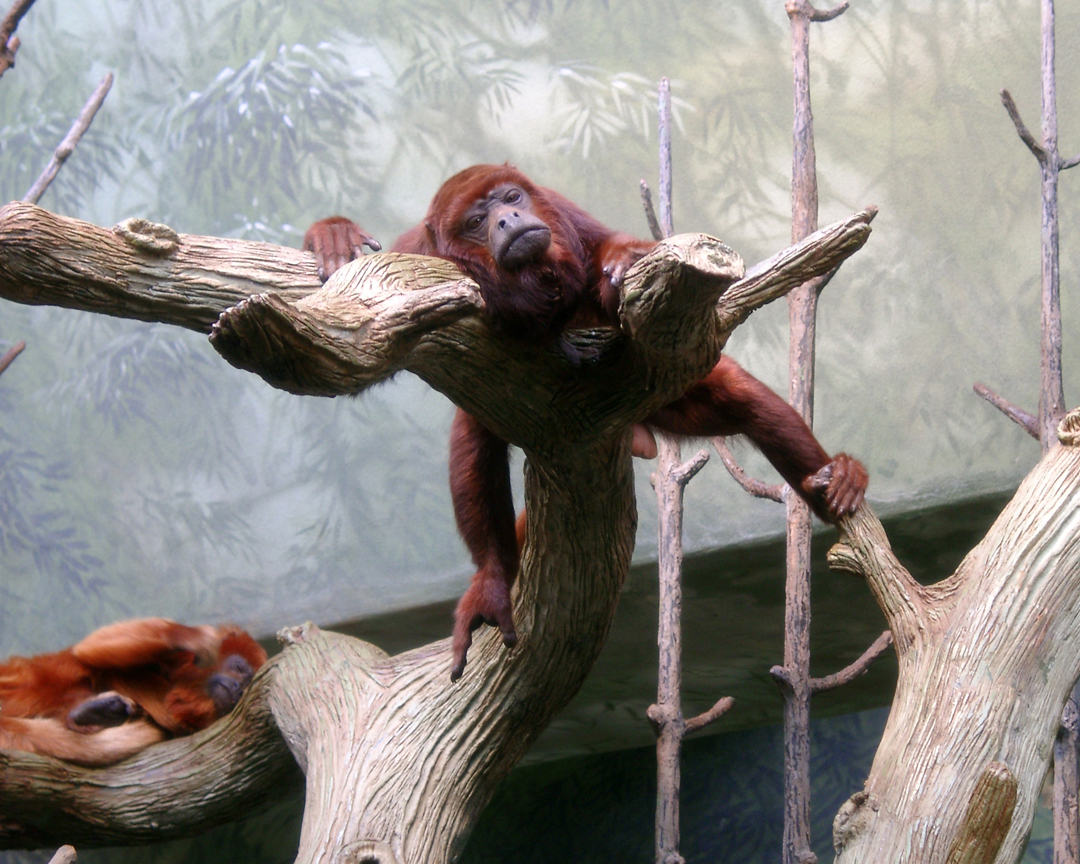
Red howler monkey

Red howler monkey, Zoologischer Garten Frankfurt, Frankfurt Zoological Garden, Bernhard-Grzimek-Allee, Frankfurt

Red howler monkey
Zoologischer Garten Frankfurt (Frankfurt Zoological Garden)
Bernhard-Grzimek-Allee
Frankfurt, October 2002

Sunday, January 25, 2004

Zoogesellschaftshaus

Zoogesellschaftshaus, Zoologische Gesellschaft Frankfurt, Frankfurt Zoological Society, Alfred-Brehm-Platz, Frankfurt

Zoogesellschaftshaus
Zoologische Gesellschaft Frankfurt (ZGF)
Frankfurt Zoological Society (FZS)

Alfred-Brehm-Platz
Frankfurt, October 2002

“Frankfurt Zoological Society (FZS) is an international conservation organization founded in 1858 with headquarters in Frankfurt am Main, Germany. FZS focuses on maintaining biodiversity and conserving wildlife and ecosystems in protected areas and outstanding wild places. FZS leads and supports about 30 projects in 18 countries. Bernhard Grzimek, renowned German zoo director, zoologist, book author, editor, and animal conservationist in postwar West-Germany, served as president of the Frankfurt Zoological Society for over forty years.” (Frankfurt Zoological Society, Wikipedia)